Who We Are
My days are pretty intertwined with school life, and I’ve always had a close view of it, growing up with parents who worked in education.
Over time, I kept noticing how often music shows up in the classroom. It’s part of how teachers set the tone, help kids settle, move between activities, or just find a moment of calm. But a lot of what’s out there is made for adults, not really for kids or the way a classroom actually feels.
That’s where Mood Magic came from. I started wondering what it would look like if there was music designed specifically for those everyday classroom moments. Something simple, accessible, and actually supportive of how kids focus and regulate.
We built it with educators and PhD researchers, but just as importantly, we shaped it through real classroom use and honest feedback from teachers.
It’s been really meaningful to see it become part of daily routines, both at school and at home. The whole idea is just to make those moments feel a little easier.

Hi, I’m Andrew!
A dad of two elementary-aged kids here in Los Angeles.



Hi, I’m Sam!
I’m a fourth-grade teacher in Los Angeles.
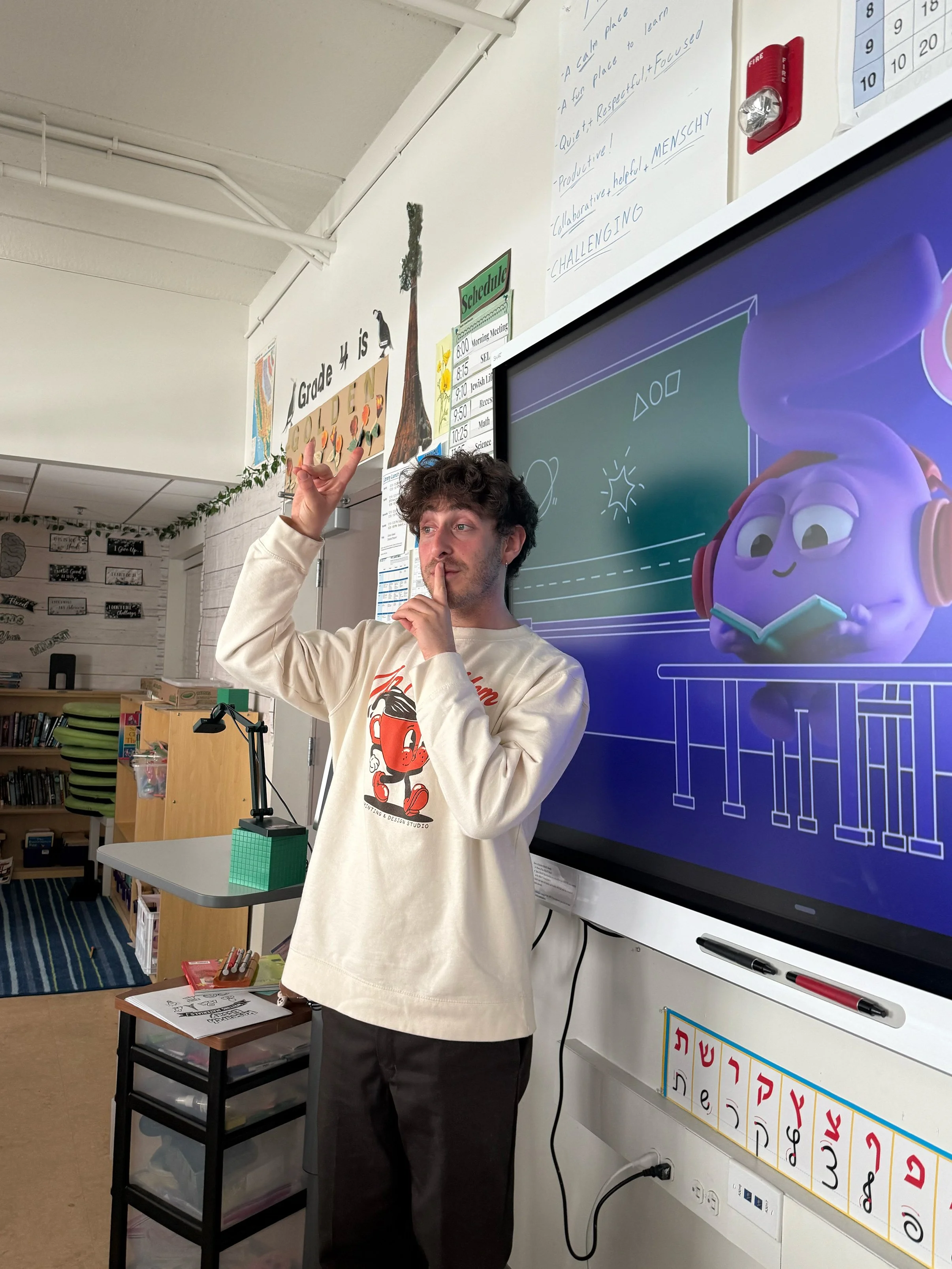
I was one of the first teachers to start using Mood Magic regularly in the classroom and to share feedback on how it actually works during a real school day.
Over time, it’s become part of our daily rhythm. I’ve used it during transitions, independent work, and moments when the class needs help settling or refocusing. What stood out to me early on was how naturally students responded to it. The room felt calmer, transitions were smoother, and it supported not just my students’ regulation, but mine too.
Being able to test and shape something like this from inside the classroom has been a meaningful part of the process, and it’s been exciting to see it grow into something other teachers can use in their own way.
Our Story
Mood Magic came together from a pretty simple starting point: classrooms already use music, but there wasn’t much out there that was actually designed for how kids learn and move through a school day.
We started working with educators, researchers, and two PhDs to better understand how sound can support focus, emotional regulation, and everyday classroom routines. Not in a theoretical way, but in a way that actually holds up during real transitions, independent work, and those in-between moments that can easily feel chaotic.
From there, Mood Magic grew into a collection of purpose-built playlists, videos, and simple tools that teachers can use right away. Everything is designed around specific moments, like starting the day, settling into work, resetting after recess, or winding things down.
A big part of shaping Mood Magic has been feedback from teachers. Early on, educators like Sam began using it in their classrooms and helped us understand what works, what doesn’t, and what actually makes a difference over time.
Our goal has stayed consistent: create something that feels easy to use, grounded in research, and genuinely helpful in the flow of a real classroom.