How Music Can Reduce Anxiety Before Tests

You can feel it in the room before the test even starts. Pencils tapping. Legs bouncing. A student staring at the ceiling, then down at their desk, then at the ceiling again. Someone asks to go to the bathroom for the third time. Another one puts their head down.
Test anxiety is one of those things that every teacher recognizes but few feel equipped to address in the moment. There's a test to give. There's a schedule to keep. And then there are your students sitting in front of you, some of whom checked out emotionally before you even handed out the papers.
So what can you actually do in the five or ten minutes before an assessment to help your students feel settled?
Music is a reasonable place to start. And the science behind it is more specific than you might expect.
What Happens in the Body During Test Anxiety
When a student feels anxious about a test, the response is not purely psychological. The body gets involved. The hypothalamic-pituitary-adrenal (HPA) axis activates, releasing cortisol, commonly referred to as the stress hormone. Heart rate increases. Blood pressure rises. The sympathetic nervous system shifts into a heightened state of alertness.
For adults, this might feel like butterflies or a tight chest. For a seven-year-old or a ten-year-old, it can look like refusal, tears, fidgeting, shutting down, or acting out. These are not behavior problems. They are stress responses.
The challenge for teachers is that this physiological activation happens before the test, and it directly interferes with the cognitive functions students need most: working memory, attention control, and retrieval. In other words, the anxiety doesn't just make students feel bad. It makes it harder for them to access what they actually know.
How Music Interacts With the Stress Response
Listening to music affects both the HPA axis and the autonomic nervous system. Multiple studies, primarily in adults, have found that music listening is associated with lower cortisol levels, reduced heart rate, and decreased blood pressure. A large meta-analysis of 104 randomized controlled trials found statistically significant effects of music on both physiological and psychological stress outcomes.
One reason this works is that calm, predictable music helps shift the nervous system away from sympathetic dominance (the fight-or-flight state) and toward parasympathetic activity (the rest-and-regulate state). Slow tempos, steady rhythms, and the absence of sudden changes in volume or intensity allow the body to ease out of high alert without requiring conscious effort from the listener.
This matters in a classroom because you cannot tell a nervous child to stop being nervous. But you can change the sensory environment around them.
Why the Type of Music Matters
Not all music produces the same effect. Research on music and anxiety consistently points to a few compositional factors that support calm:
Tempo plays a significant role. Music in the range of 60 to 80 beats per minute tends to align with a resting heart rate, which can encourage physiological down-regulation. Faster tempos can have the opposite effect, increasing arousal rather than reducing it.
Predictability also matters. When musical patterns are steady and repetitive, the brain does not need to allocate attention to tracking unexpected changes. This frees up cognitive resources and reduces the overall load on working memory, which is already under strain during test anxiety.
Lyrics create a separate problem. As we discussed in our post on instrumental vs. lyrical music, the brain automatically processes language. Before a test, students are already taxing their verbal working memory by reviewing information, reading instructions, and managing internal self-talk. Adding another stream of language through song lyrics increases competition for those same resources.
Instrumental music with a calm tempo, low complexity, and consistent structure tends to produce the best outcomes for pre-test environments.
What This Looks Like in a Classroom
Practically speaking, using music before a test does not require a complicated setup or a big block of time. Five to ten minutes of calm, instrumental music while students prepare can be enough to shift the room.
Some teachers play music as students enter the classroom on test days, creating an auditory signal that the environment is settled and safe. Others play it during the transition between instruction and the test itself, using it as a buffer that gives students a few minutes to breathe and organize their materials.
The key is consistency. When students begin to associate a particular sound environment with calm, the effect compounds over time. The music becomes a cue. Their bodies start to respond to it before conscious thought catches up.
This is one of the ideas behind Mood Magic. Each video and playlist is built for a specific classroom moment, using research-informed composition rather than general background music. For testing, that means instrumental tracks with steady tempos, minimal melodic complexity, and a calm, uncluttered sound. The music is designed to reduce cognitive friction rather than add stimulation.
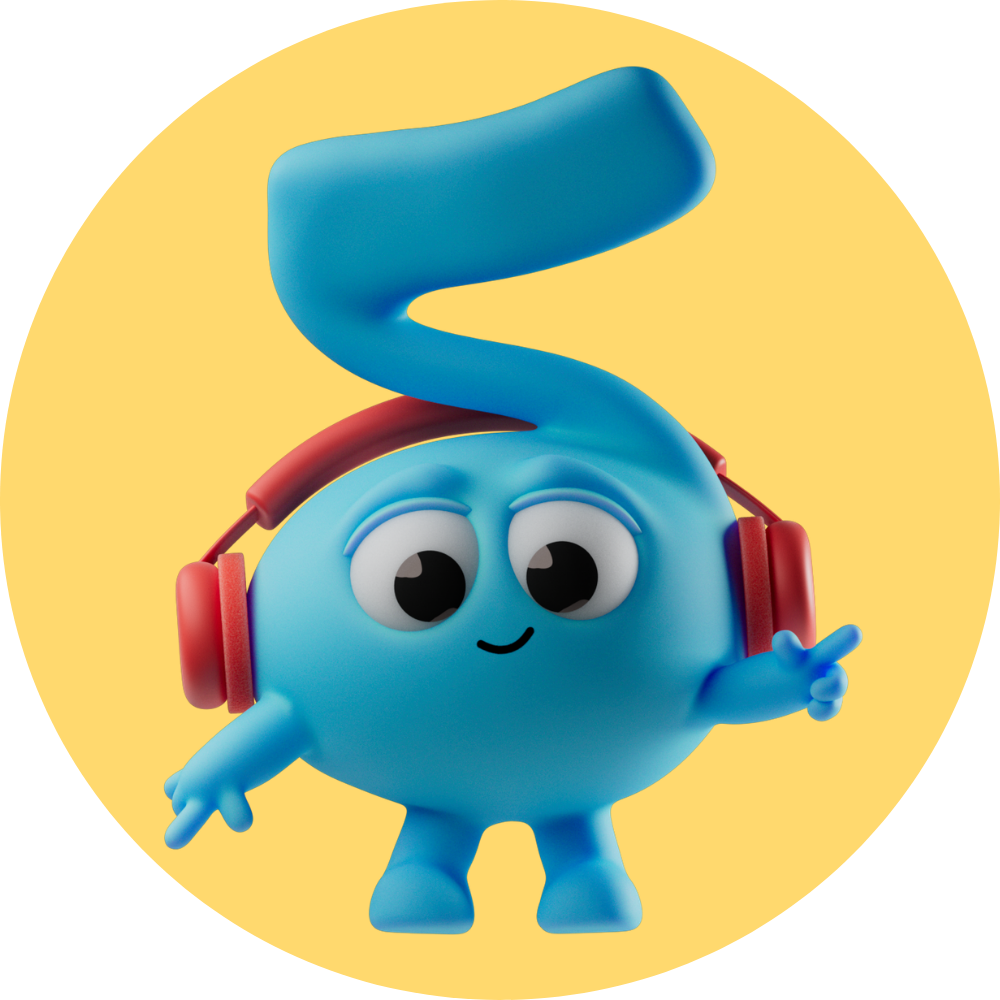
Mood Magic also uses its focus buddy character, Mely, to visually model calm, focused behavior. On screen, Mely sits quietly, writes, or reads. For students who are visually distracted or struggling to self-regulate, having a simple, gentle visual anchor on screen can support the same message the music is sending: this is a calm moment. You are okay. Focus is possible.
A Note on What Music Cannot Do
Music is not a cure for test anxiety. Students who experience chronic or severe anxiety need support that goes well beyond what a playlist can provide, and teachers should feel empowered to connect those students with counselors and specialists.
What music can do is change the conditions of the room. It can soften the sensory environment, lower the baseline level of physiological stress, and give students a better chance at accessing their knowledge when they need it. It can also help teachers feel calmer, which matters more than most professional development will ever acknowledge.
The research supports using calm, instrumental music before assessments as one piece of a larger approach to supporting student well-being. It is simple. It is free. And it takes nothing away from the test itself.
If your students are anxious before tests, the room itself might be part of the problem. Music is one way to change that.